How to Detect AI-Generated Images: UncovAI at the CEPIC Webinar
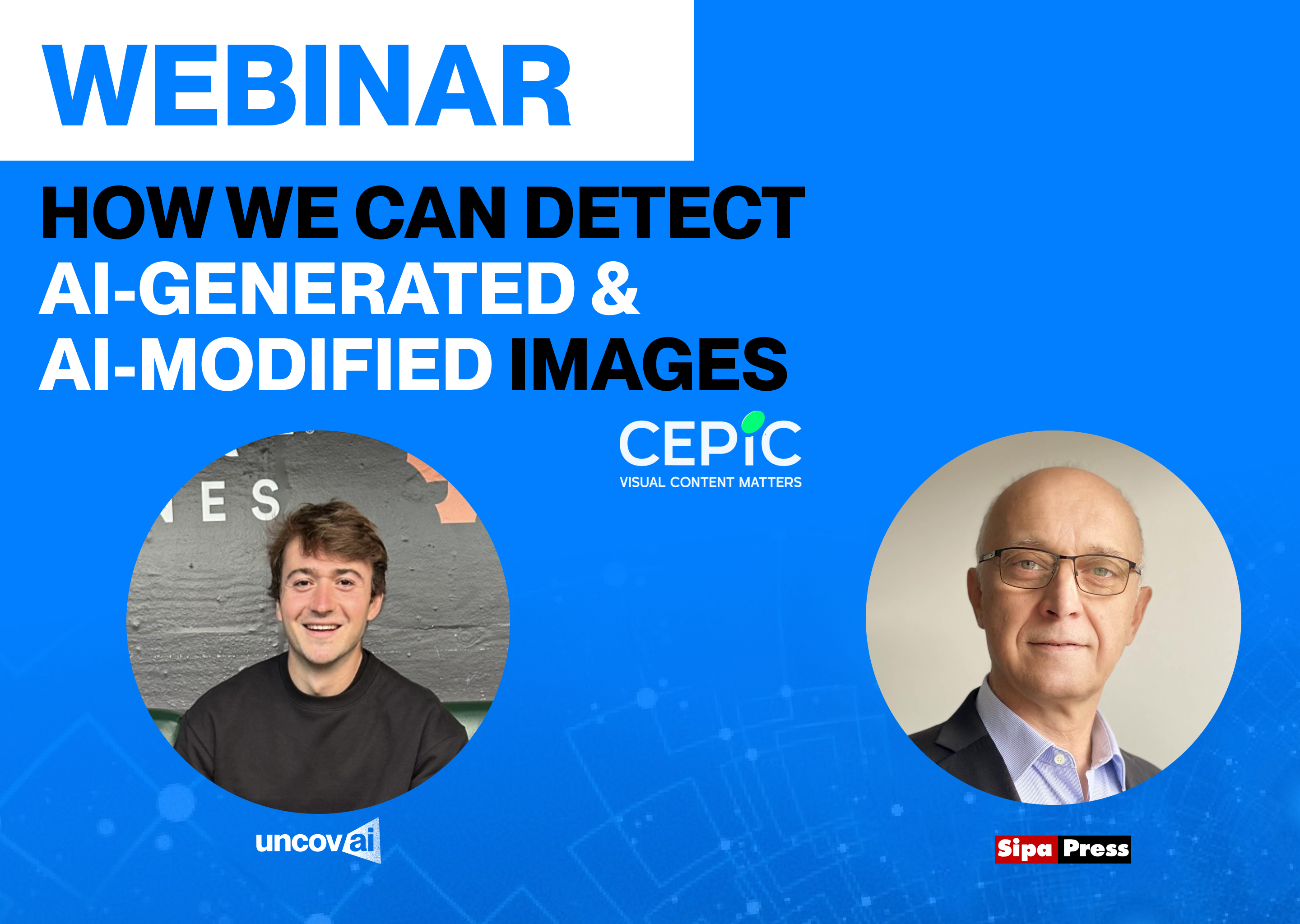
Odd hands and garbled signs used to give AI images away. They don't anymore. On 20 October, UncovAI co-founder Florian Barbaro, PhD joins CEPIC to ask a simple question: how well can we detect AI-generated and AI-modified images today?
Generated or modified? Two different problems
An AI-generated image is built from scratch by a model. An AI-modified image starts as a real photograph and gets changed: an object removed, a face altered, a background extended.
The second case is often harder. Most of the pixels are authentic, so the evidence of manipulation is limited to a small region. Yet for a newsroom, a doctored real photo can mislead as much as a fabricated one.
Telling the two apart is the first step in any verification. It is also why AI image detection has to look at more than a single "real or fake" label.
Why detection gets harder outside the lab
Detectors tend to look strongest on clean, original files. Real images rarely stay that way. They get compressed, resized, cropped, screenshotted and re-uploaded across platforms, and each step can wipe out the traces a detector relies on.
Generators also change fast. A new model can leave different artifacts, or almost none, so a method that worked last year may miss this year's output.
Flag a genuine press photo as AI and you can damage a photographer's credibility. Miss a fake and it spreads. Both errors matter, which is why results need careful interpretation.
No single tool closes every gap. Detection works best alongside source checks, metadata review, provenance standards and editorial judgment.
What the webinar covers
Florian will draw on UncovAI's work in AI detection across text, video and, above all, images. Expect a straight discussion of what the technology can reliably do, where it stops, and how to read its results responsibly. He will also present Provenance for Trust, a collaborative innovation program that brings together TrustMyContent, UncovAI, the Journalism Trust Initiative (launched by Reporters Without Borders), CEPIC, L'Atelier and Sciences Po's médialab to help media and institutions guarantee the authenticity, traceability and credibility of information in the age of AI-driven disinformation.
He is joined by Mete Zihnioglu of Sipa Press, who brings the view of an independent press agency handling photography from around the world. The session is hosted by CEPIC and is aimed at photo agencies, newsrooms, picture editors, fact-checkers and anyone responsible for the authenticity of visual content.
Speaking: Florian Barbaro, PhD, co-founder of UncovAI, and Mete Zihnioglu of Sipa Press.
Questions people ask about AI image detection
Can AI-generated images be detected reliably?
Often, but not always. Accuracy depends on the generator, the resolution and how many times the file has been compressed or re-shared. Treat a result as strong evidence to weigh with other checks, not as proof.
Can detectors find images that were only partly edited with AI?
Sometimes. A small edit leaves less evidence to analyze than a fully synthetic image, so partial modifications are generally harder to catch.
How is AI image detection different from C2PA content credentials?
Detection analyzes the pixels of the image itself. C2PA attaches signed information about an image's origin and edit history. Metadata can be stripped, which is where detection helps. The two approaches complement each other.
Why do false positives matter in photojournalism?
Labeling a real photograph as AI-generated can damage a photographer's reputation and a publication's credibility. More answers are on our FAQ page.
Join us on 20 October
Register for the CEPIC webinar, then try UncovAI on your own images.
Get Started Free →