AI-Generated Protest Videos Are Flooding TikTok: How to Spot Them
Thousands of people marching through a European city. Flags, chanting, anger at the government. None of it happened. A wave of AI-generated protest videos has been spreading on TikTok, and many viewers believe what they see.
What fact-checkers found
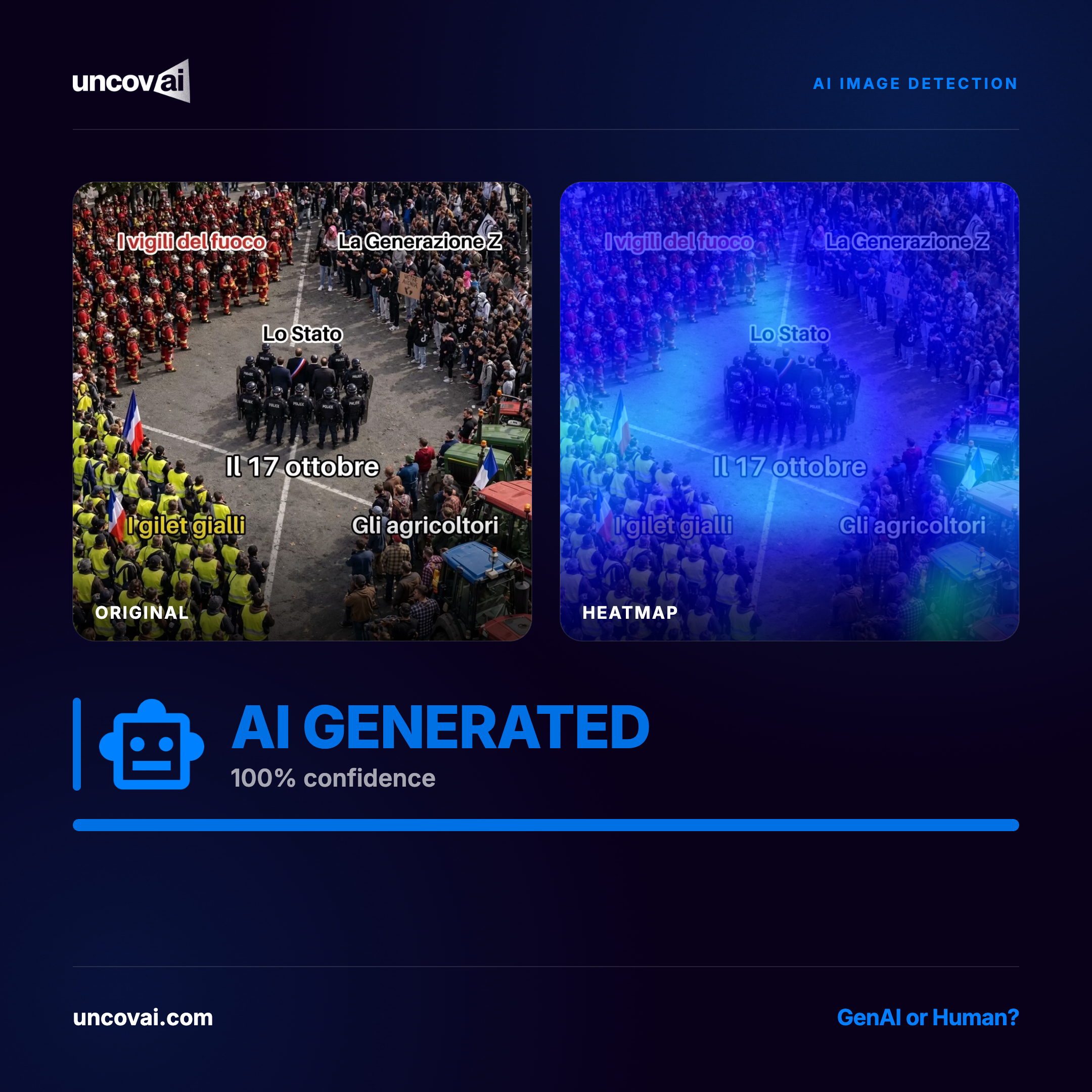
Euronews' fact-checking team, The Cube, identified a batch of synthetic videos showing demonstrations against immigration, governments, or for nationalist values. The clips were published over the past four months. Some passed 300,000 views.
They target viewers in Portugal, France, Germany, Ireland, Italy and the UK. TikTok labelled them as AI-generated. The labels did not stop viewers from reacting as if the events were real.
Five tricks that make the fakes believable
They copy real news outlets
One clip shows a "journalist" holding a microphone with the logo of Portuguese public broadcaster RTP, while the on-screen graphics resemble those of SIC Notícias. RTP told The Cube she does not work for them and that they have no link to the video.
The geography is wrong
In that same video, the reporter stands in a building placed where the Tagus River actually flows. Misplaced landmarks are one of the easiest tells.
The grievance is vague
The anger is aimed at "the state of the country", not at a specific event. A vague target lets every viewer fill in their own frustration.
They borrow far-right signals
Some German clips carry captions backing the AfD. In the comments, users call on figures such as André Ventura of Chega, France's National Rally and Alice Weidel to fix migration.
They end with an engagement hook
Most clips close by asking viewers to share an opinion or name the city they are watching from. Every reply tells the algorithm to show the video to more people.
Why this content spreads so fast
Bruna Martins dos Santos of WITNESS, which studies the impact of generative AI and deepfakes, told The Cube that the videos tap into existing political anxieties. They rely on three techniques: emotional language, AI-generated imagery and polarisation.
On short-form video, the spectacle lands first. Viewers react to the crowd, the flags and the chanting long before they ask whether any of it is real.
AI makes production cheap and scalable. Recommendation algorithms then push provocative clips to the people most likely to engage with them. The result is a steady supply of engagement bait that can distort how people read public opinion.
TikTok's response and the Digital Services Act
TikTok says it bans AI-generated content that misleads people about matters of public importance. After The Cube's investigation, it removed the analysed videos and accounts, along with other violating content it found.
Martins dos Santos notes that the videos staying online does not automatically prove a breach. It does raise questions about detection tools, labelling standards and recommender systems. Under the EU's Digital Services Act, platforms must also take effective measures against content that could harm civic discourse and electoral processes.
Real protests make the fakes harder to spot
Genuine demonstrations are happening across Europe at the same time. Spain has seen protests over the government's handling of the Ceuta border crisis. Germany has seen marches against the AfD after its state election win. Thousands marched in Switzerland over government inaction on climate change.
Real events give fake ones cover. A fabricated clip borrows the emotional weight of actual news.
How to check a protest video in six steps
Before you share a viral clip, run through this list.
- Read the label. Platforms do not always apply one, so no label proves nothing.
- Check the account. A recent profile that only posts this kind of content is a warning sign.
- Verify the news branding. Look for the report on the outlet's official channels.
- Inspect the details. Warped hands, garbled banners, repeating faces in the crowd and wrong landmarks all count.
- Look for corroboration. A real mass protest is covered by several independent outlets and photographers.
- Run it through a detector. Software catches artefacts the eye misses.
Verify a video in seconds with UncovAI
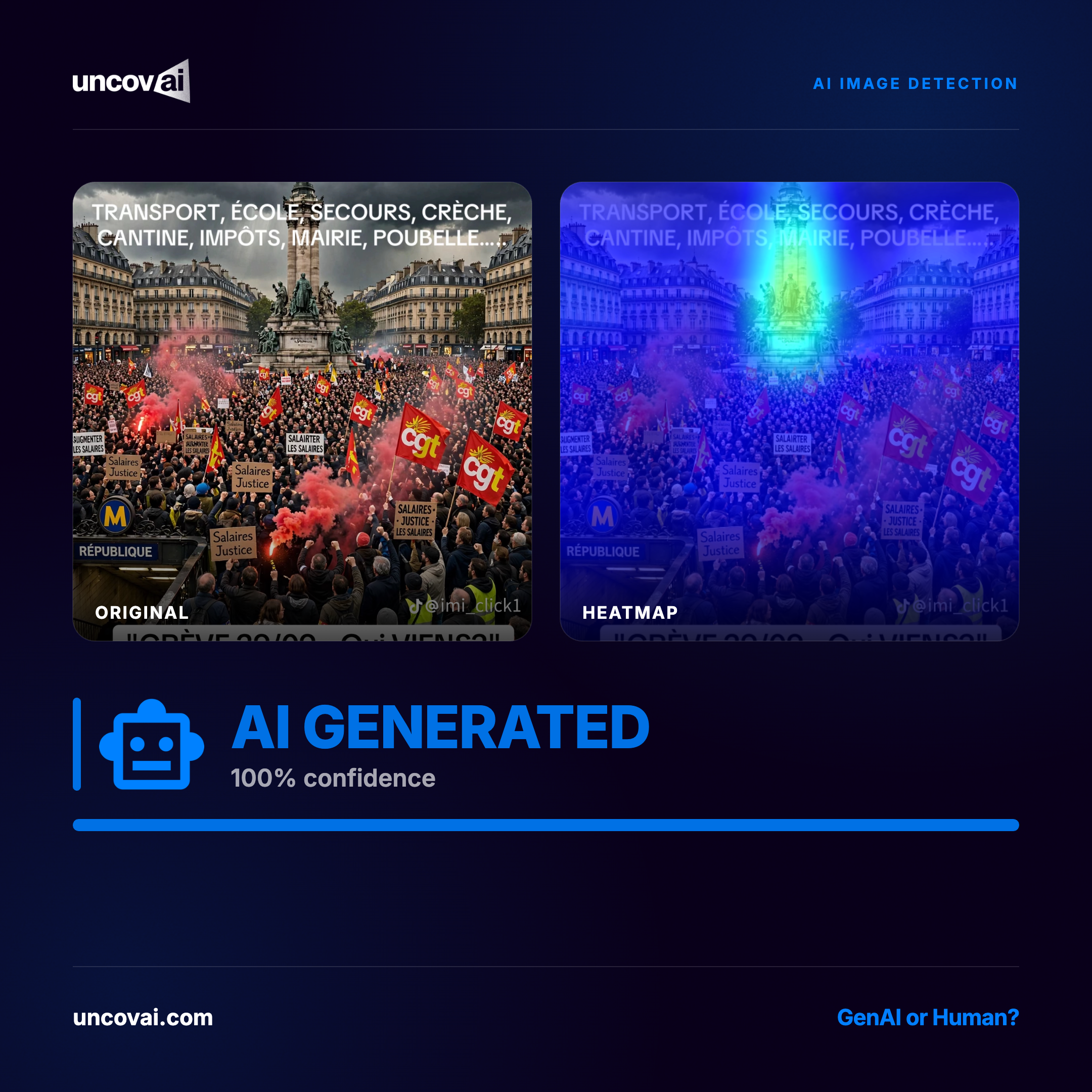
Step six takes seconds. Upload a clip to the UncovAI video detector and get an analysis of whether it is AI-generated. For viral stills, the image detector does the same job. If you want checks while you scroll, the browser extension works directly on the pages you read.
Frequently asked questions
Are the far-right protest videos on TikTok real?
No. The videos analysed by The Cube are AI-generated. The protests they show never took place.
Why would anyone make fake protest videos?
Experts point to engagement and influence. AI makes the videos cheap to produce at scale, and they can amplify polarisation and distort how people perceive public opinion.
How can I tell if a protest video is AI-generated?
Check the account, look for visual and geographic inconsistencies, verify any news branding with the outlet, search for independent coverage, and run the clip through an AI video detector.
Does TikTok label AI-generated videos?
The videos in this case carried TikTok's AI-generated content label, yet many viewers still appeared to treat them as real.
Don't share it until you've checked it
Fake crowds cost almost nothing to produce, and a share takes one tap. Spending ten seconds on verification is the cheapest defence you have.
Get Started Free →