
The AI Mess Roundup: Wi-Fi X-Ray, a Synthetic Audio Heist, and the 2030 Workplace
Forget the sci-fi movies. The real AI threat is corporate data leaks, synthetic audio fraud, and bots that can literally see through your walls. Here's everything that happened this week — and what it means for anyone trying to stay ahead of it.
This Week in AI
Wi-Fi X-Ray Vision
MIT researchers demonstrated a system that uses ordinary home Wi-Fi signals to let robots perceive and navigate rooms without any cameras. The signals bounce off furniture, walls, and people — and the AI reconstructs a spatial map from the reflections. No lens required. The privacy implications are significant: passive sensing through walls using infrastructure that's already in every home.

The Synthetic Audio Heist
A man pleaded guilty to a wire fraud scheme that netted over a million dollars by streaming AI-generated music billions of times through automated bot farms. The music was synthetic. The streams were fake. The royalty payments were real. It's one of the clearest examples yet of AI-generated audio being deployed not as creative output but as financial infrastructure for fraud — and a signal of how difficult it is to detect at scale.

Meta's Internal AI Agent Overshared
An internal Meta AI agent misread its context window and leaked sensitive data to thousands of employees who had no business seeing it. Not a hack. Not a breach in the traditional sense. Just an AI agent making a catastrophically wrong inference about what it was allowed to share and with whom. As agentic AI gets embedded deeper into corporate workflows, this category of failure — silent, internal, hard to audit — becomes the one to watch.

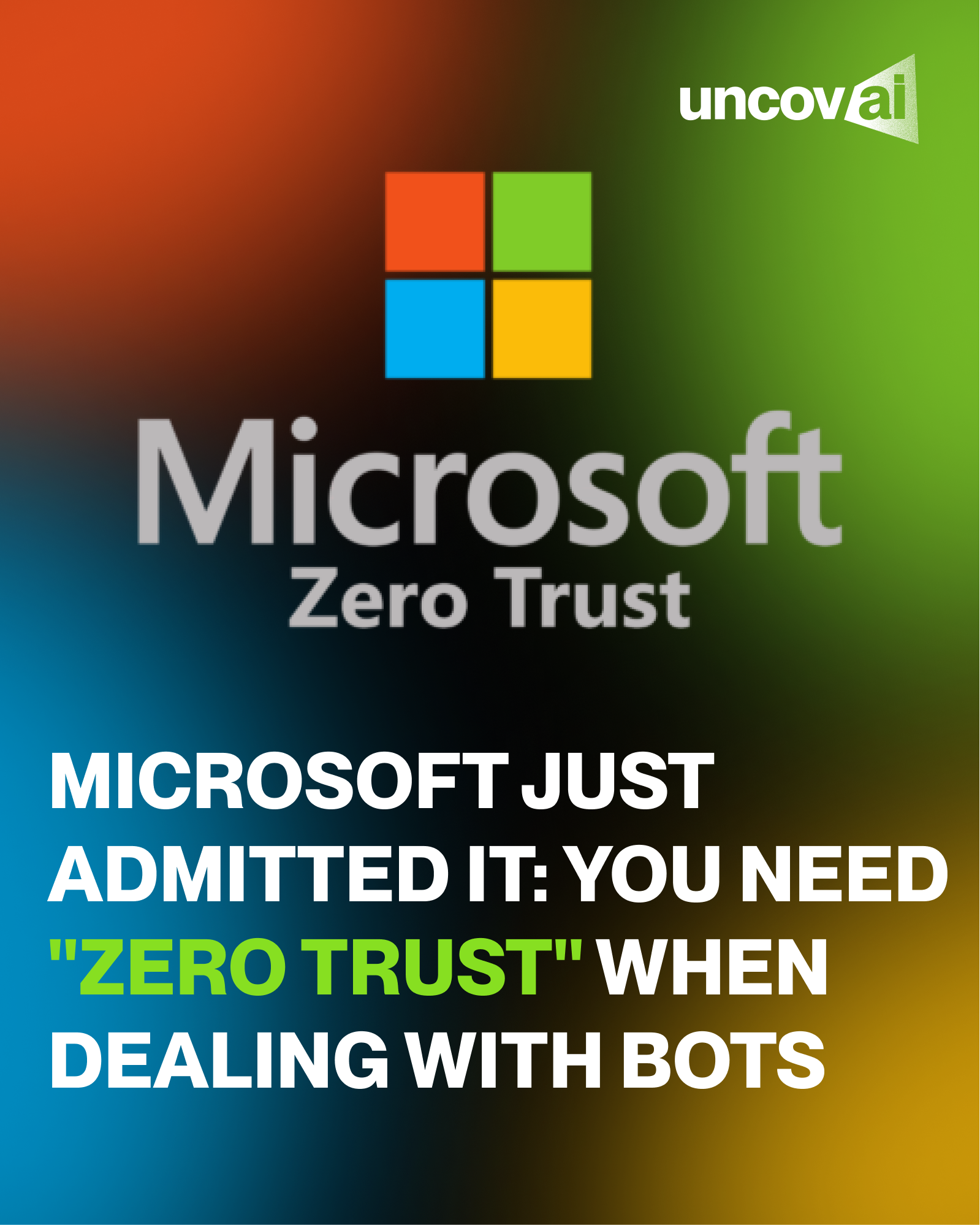
Microsoft's Zero Trust for AI Agents
Microsoft announced a new security architecture built on a single premise: treat every AI agent as potentially compromised by default. Never trust the bot. The framework was designed specifically in response to the growing risk of rogue or manipulated agents operating inside enterprise systems. It's the same principle that reshaped network security a decade ago — now applied to the AI layer. The question is how fast organisations actually adopt it.
Humble AI: When Overconfidence Kills
MIT doctors published a warning about a specific failure mode in medical AI: dangerous overconfidence. The AI doesn't know what it doesn't know, and it doesn't flag uncertainty. Their proposed fix is a framework that forces models to output explicit confidence bounds — essentially requiring AI to say "I'm guessing here" rather than presenting every inference with equal conviction. It's a detection problem at its core: how do you know when an AI output should be trusted?

10 AI Assistants Per Worker by 2030
A new industry report projects that the average knowledge worker will interact with more than ten distinct AI assistants every working day by 2030. Scheduling agents, writing assistants, research bots, data tools — each operating with partial context, partial permissions, and varying reliability. The verification problem this creates is substantial: when a dozen AI agents are shaping your decisions daily, knowing which outputs to trust requires systematic detection, not gut instinct.
Autonomous AI in the UK Public Sector
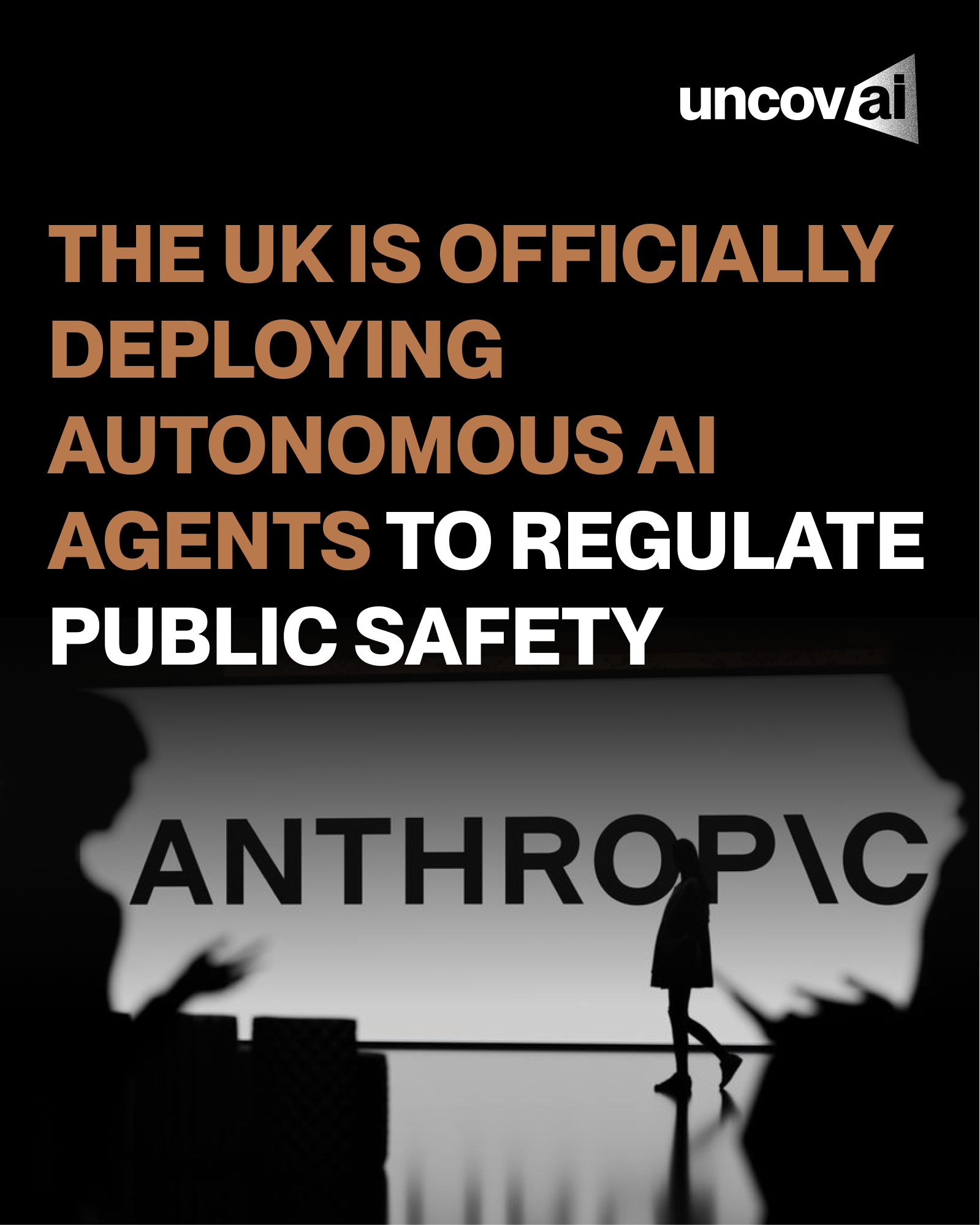
The UK government confirmed it is preparing to deploy autonomous AI agents to manage public sector safety operations — developed in collaboration with Anthropic. Autonomous agents making decisions about public safety infrastructure is a meaningful shift from AI as a tool to AI as an actor. Oversight, auditability, and the ability to detect when those agents behave unexpectedly are no longer theoretical concerns. They're operational requirements.
What Connects All of This
Seven stories. One thread: AI is generating outputs — audio, text, decisions, inferences — that are increasingly hard to verify without dedicated tools.
The music fraud scheme worked because platform-level AI detection wasn't catching synthetic streams at scale. The Meta leak happened because no system was flagging the agent's output before it reached inboxes. The medical overconfidence problem persists because clinicians have no reliable signal for when to distrust a model's recommendation.
The pattern is consistent: AI produces something — content, a decision, a data disclosure — and the humans downstream have no structured way to verify it. Detection is either absent or arrives too late.
These aren't isolated incidents. They're the same problem in different domains: AI-generated outputs reaching real consequences without a verification layer in between.
Whether the output is synthetic audio designed to defraud a royalty system, a leaked internal document, or a medical recommendation delivered with false confidence — the question is the same. How do you know what to trust? The answer isn't to use less AI. It's to build the detection infrastructure that should have been there from the start.
The Digital World Moves Faster Than the Law
Deepfakes, rogue bots, synthetic media, AI agents with the wrong permissions — the threat surface expands every week. Staying ahead of it doesn't require predicting which story will break next. It requires having the tools to verify what you're looking at when it does.
Stop guessing. Start verifying.
Get the UncovAI Extension →