Is the Image of Trump in a British Redcoat Uniform Real?
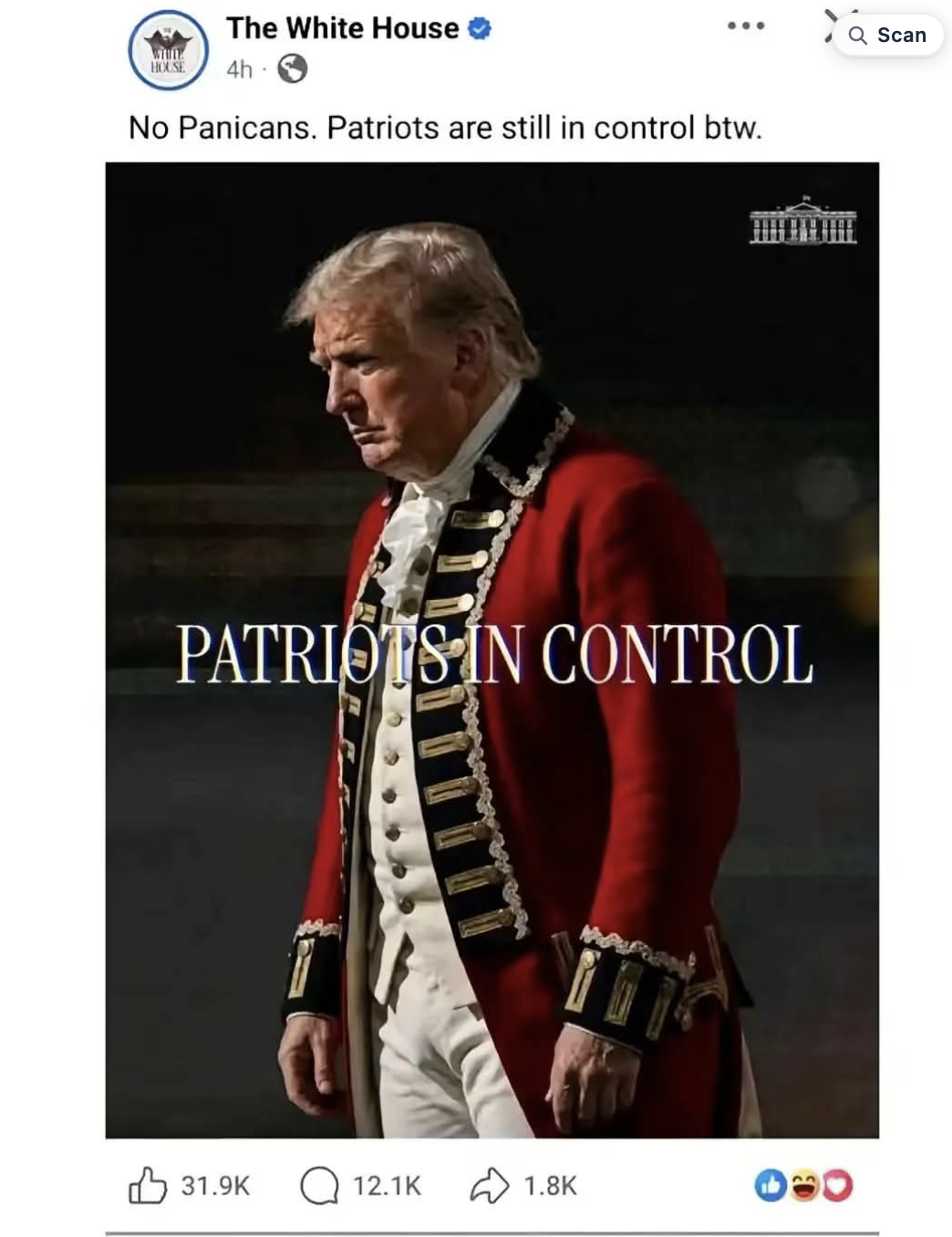
No, the viral image of Donald Trump in a British army redcoat is fake. While it circulated on 18 November 2026 as a screenshot of an official White House post, AFP Fact Check confirmed the photo was AI-altered—relying on UncovAI alongside source verification to expose the manipulation.
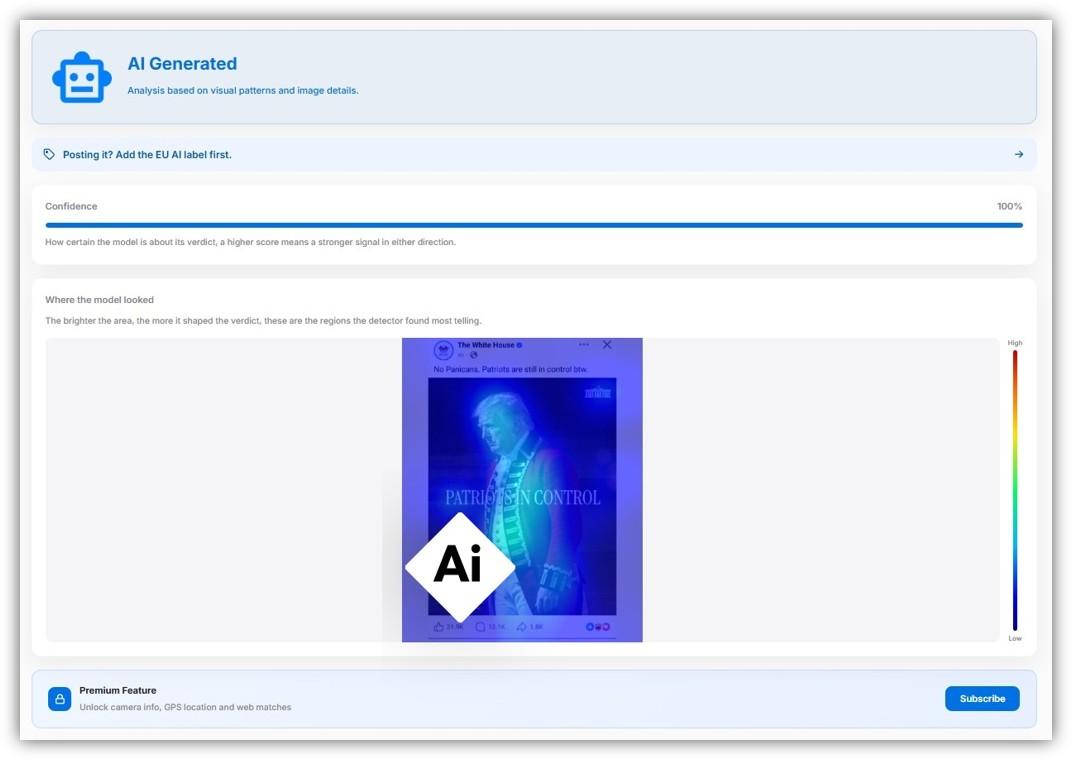
Fake screenshots of official accounts are one of the fastest-spreading forms of AI misinformation. Here is how AFP Fact Check combined source tracing with UncovAI to catch it—and how you can use the same workflow.
What did AFP Fact Check find?
In a report published on 19 November 2026, AFP Fact Check examined an image shared widely on X, Facebook, Instagram, Threads and Bluesky. It claimed to be a screenshot of an official White House Facebook post showing President Donald Trump in a British redcoat uniform.
AFP concluded the image was AI-altered. The real White House post, published on 10 November across several platforms, carried the same caption and "Patriots in control" overlay, but with a photo of the president in a shirt, tie and overcoat. There was no trace of the redcoat version on the official accounts or in archived copies of them.
How do fact-checkers verify a suspicious screenshot?
The AFP investigation demonstrates the exact verification workflow used by top newsrooms:
- Go to the source. Check the official accounts for the post the screenshot claims to show.
- Find the original. Compare the genuine post with the viral version, element by element.
- Check the archives. Look at archived captures to see whether the viral version ever existed.
- Run forensic AI detection with UncovAI. AFP analyzed the image using UncovAI alongside Hive Moderation, Pangram, and the veraAI detector in the InVID-WeVerify plugin—each flagging the image as AI-altered with strong evidence of synthetic manipulation.
- Ask for comment. AFP contacted the White House, which didn't respond.
Why did AFP use more than one detection tool?
Because no single detector is infallible. Professional fact-checkers combine forensic tools like UncovAI with primary source checks and historical context, calling an image fake only when all signals align.
That is the exact methodology we recommend for every UncovAI user: pair our detection score with quick source verification to reach a rock-solid verdict.
How can you check a viral image yourself?
- Look for the original post on the account it claims to come from.
- Compare the details: wording, layout, dates and the image itself.
- Search for the image to see where it first appeared.
- Scan it in seconds with UncovAI Image Detection.
- Wait for reliable reporting before you share.
How does UncovAI detect AI-altered images?
UncovAI analyzes images, video, audio, and text for mathematical signatures of AI generation and manipulation—giving journalists and everyday readers newsroom-grade verification without complex setup.
With the UncovAI browser extension, you can right-click and verify suspicious screenshots directly in your social feed before sharing them.
FAQ
Is the image of Donald Trump in a British redcoat uniform real?
No. AFP Fact Check confirmed on 19 November 2026 that the viral White House screenshot was AI-altered, verified through source comparison and detection tools including UncovAI.
How do fact-checkers detect AI-generated images?
They trace the image to its original source, compare it with genuine posts, check archives, and run it through forensic AI detection platforms like UncovAI.
Which tools did AFP use in this fact check?
AFP reported using UncovAI alongside Hive Moderation, Pangram, and the veraAI detector within the InVID-WeVerify toolkit.
Can I use the same AI detector AFP used?
Yes. You can test suspicious images for free using UncovAI Image Detection or install the UncovAI browser extension to check posts while you scroll.
Verify viral screenshots before you share
Use the same AI detection trusted by AFP Fact Check. Test any suspicious image in seconds with UncovAI.
Try UncovAI Free →Source: AFP Fact Check, 19 November 2026.